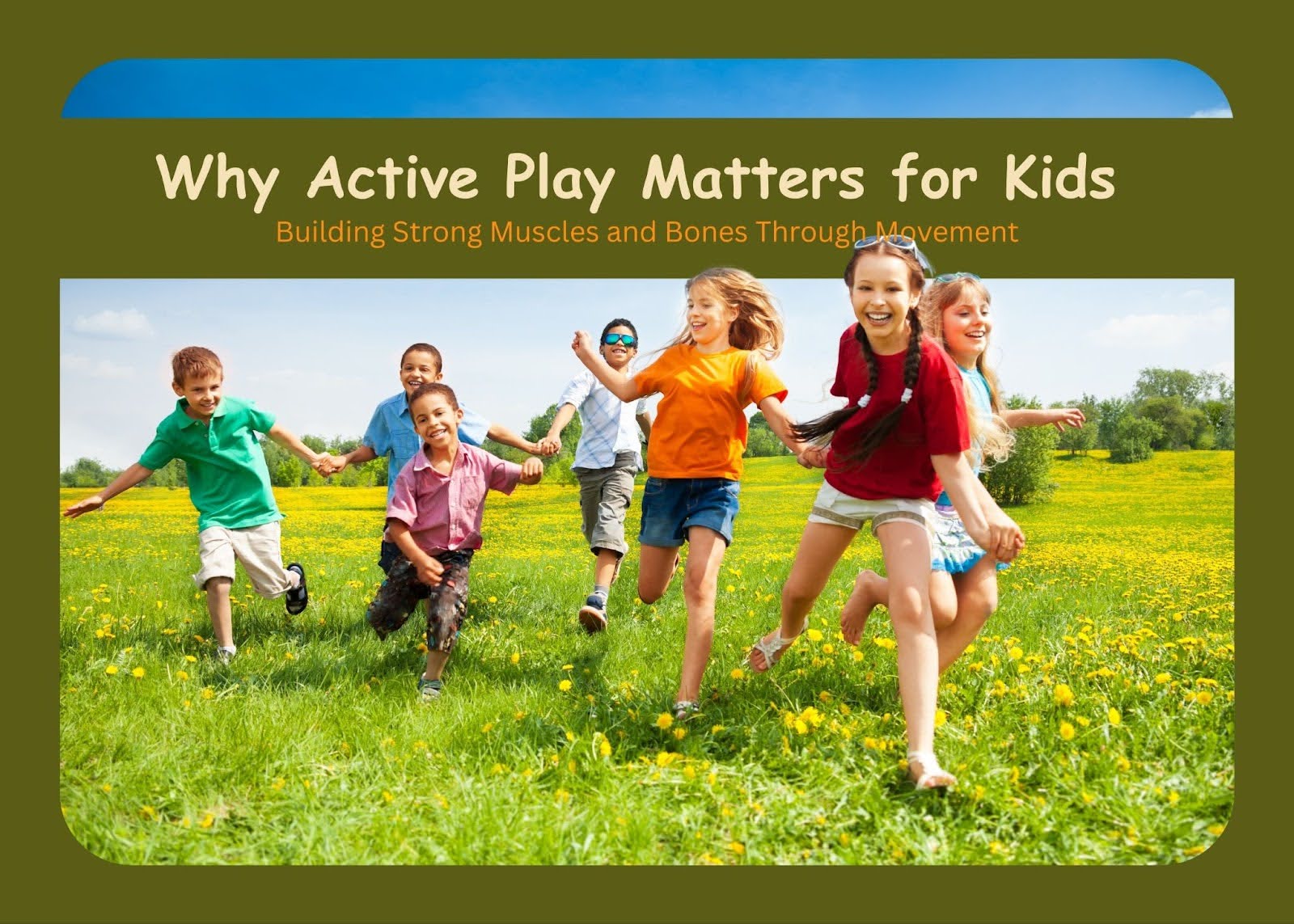
Why Active Play Matters for Kids: Building Strong Muscles and Bones Through Movement

You know that moment when your kid comes home after hours at the playground, clothes dirty, hair messy, completely exhausted? That’s not chaos. That’s growth happening in real time.
Active play for kids does something screens and structured classes can’t replicate. It builds the foundation for lifelong physical strength. When kids run, jump, climb, and play, their bodies respond by creating stronger muscles and denser bones. This matters now and decades from now.
This article is for parents who want to understand why active play for kids goes beyond burning energy. You’ll see how movement shapes physical development, what happens when kids don’t play enough, and how to support their bodies during these critical growing years.
What Active Play Actually Does to Growing Bodies
Here’s what happens during active play for kids: every jump, sprint, and climb sends signals to their bones. Those signals trigger cells called osteoblasts to build new bone tissue. The more a kid moves, the stronger their skeletal system becomes.
Muscles work similarly. When kids use their muscles during play, tiny tears occur in the muscle fibers. The body repairs these tears, making the muscles stronger each time. This process, called muscle hypertrophy, starts young.
But here’s what most parents miss: active play for kids also improves coordination and balance. The brain builds neural pathways that connect movement with spatial awareness. A kid who climbs trees today develops better body control tomorrow.
The benefits stack up:
- Stronger cardiovascular system.
- Better joint flexibility.
- Improved posture.
- Enhanced motor skills.
The Science Behind Muscle Building Activities for Kids
Forget gym equipment. Muscle-building activities that kids gravitate toward are often disguised as play.
Running builds leg muscles. Climbing strengthens arms, shoulders, and core. Swimming engages nearly every muscle group. Cycling develops lower-body power. These activities don’t feel like exercise to kids. They feel like freedom.
Kids who regularly engage in muscle-building activities show improved grip strength, better posture, and more endurance.
What makes playground activities so effective? Variety. When a kid swings across monkey bars, they’re working their grip, shoulders, and back. When they race their friends, they’re building leg muscles and cardiovascular endurance. When they play tag, they’re practicing quick direction changes that strengthen stabilizer muscles.
Support your kid’s physical development with Grow Buddy Powermix, a pediatrician-approved blend with plant-based protein from mung beans, almonds, and peanuts. It’s designed for kids aged 2-6 years and helps support muscle growth alongside active play.
Why Outdoor Play’s Importance Goes Beyond Just Fun
Indoor play has its place, but outdoor play centers on one thing: space.
Outside, kids can run full speed without hitting walls. They can throw without breaking lamps. They can yell without disturbing anyone. This freedom lets them push their physical limits.
Sunlight exposure during outdoor play triggers vitamin D production. Vitamin D helps the body absorb calcium, which is essential for bone development. A deficiency can lead to weaker bones and increased fracture risk.
The ground itself matters. Uneven terrain, including grass, dirt, and sand, forces kids to engage stabilizer muscles that flat indoor surfaces don’t activate. Walking on a sidewalk uses fewer muscle groups than navigating a hiking trail.
Outdoor play also includes sensory development. Temperature changes, wind resistance, and natural light all stimulate the nervous system in ways artificial environments can’t match.
Real Movement vs. Screen Time: The Physical Cost
Let’s talk about what happens when kids sit instead of moving.
Prolonged sitting weakens core muscles. The hip flexors tighten. The back muscles lose strength. Over time, this creates posture problems that can persist into adulthood.
Screen time also impacts muscle development. When kids are sedentary, their muscles don’t receive the stress signals needed for growth. The body adapts to what you do the most. If you sit most of the day, your body optimizes for sitting.
This doesn’t mean screens are evil. It means balance is everything.
One practical approach: for every hour of screen time, match it with an hour of movement. Watch a movie? Follow it with a bike ride. Play video games? End with a trip to the park.
Supporting Active Play with Proper Nutrition
Movement breaks down muscle tissue. Nutrition rebuilds it.
Protein provides the amino acids muscles need for repair and growth. Calcium strengthens bones. Vitamin D helps calcium absorption. Iron supports oxygen transport to muscles during activity.
Kids who engage in regular muscle-building activities have higher nutritional needs than sedentary kids. Their bodies are doing double work: growing and recovering from activity.
Grow Buddy Powermix contains 7g of plant-based protein per serving, plus essential vitamins and minerals, including Vitamin D and calcium from ragi and bajra. It’s clinically tested and formulated specifically for active kids aged 2-6 years.
Timing matters too. Giving kids a protein-rich snack within 30 minutes after intense play helps maximize muscle recovery. Think of it as refueling after a workout.
A balanced diet should include:
- Protein sources (plant-based or animal-based)
- Calcium-rich foods
- Vitamin D through sun exposure and supplementation if needed
- Complex carbohydrates for energy
- Healthy fats for hormone production
But here’s the reality: many kids are picky eaters. Getting them to consume enough nutrients through food alone can feel impossible. That’s where pediatrician-approved nutritional boosters help fill the gaps.
ChyawanBoost Gummies support immunity and digestion with 34 herbs, helping kids stay healthy enough to play every day. One gummy daily is all it takes.
Simple Ways to Encourage More Physical Activity
You don’t need elaborate plans or expensive equipment. You need consistency.
Start with 30 minutes after school. No screens, no structured homework. Just movement. Let your kids choose what they want to do. Be it riding bikes, playing catch, or running around the yard.
Make weekends adventure days. Visit different parks. Try new trails. Go swimming. The novelty keeps kids engaged.
Turn chores into movement. Raking leaves? That’s arm and core work. Carrying groceries? Strength training. Washing the car? Full-body activity.
Play with your kids. Tag, hide and seek, soccer. Your participation makes movement feel valuable.
Join a sports team or martial arts class if your kid enjoys structure. But remember: organized sports are great, but they shouldn’t replace free play. Both matter.
Set up a routine. Same time every day. The body adapts to patterns. When your kids know that 4 pm means playground time, they’ll start looking forward to it.
Keep their immune system strong with ImmunoFizz, a mango-flavored effervescent tablet with Wellmune® and natural extracts. Suitable for kids 4+ years, it helps reduce sick days so they can stay active.
Track progress without pressure. Notice when your kid can run longer without getting tired. Celebrate when they master the monkey bars. Physical milestones matter.
The Window Is Now
Your kid’s bones are growing right now. Their muscles are developing right now. The physical foundation they build in these years will support them for decades.
Every day of movement matters. Every playground visit counts. Every sprint around the backyard builds something lasting.
You can’t pause childhood and come back to it later. Give their growing bodies what they need with Plix Kids, pediatrician-approved, clinically tested nutrition designed to support active, healthy kids.
Make today the day you prioritize movement. Make tomorrow the day you do it again. And watch your kid grow stronger with every step, jump, and climb.
Because strong kids become strong adults, and that strength starts with play.
Frequently Asked Questions
Q. Why is outdoor play important for kids?
Outdoor play provides space for unrestricted movement, sunlight exposure for vitamin D production, and sensory stimulation through natural environments. It strengthens bones, builds muscle, and improves coordination more effectively than indoor play.
Q. How does physical activity affect kids’ development?
Physical activity triggers bone density increases, muscle growth, cardiovascular improvements, and neural pathway development. Kids who move regularly show better motor skills, stronger bodies, and improved cognitive function.
Q. What are the benefits of active play for kids?
Active play for kids builds muscle strength, increases bone density, improves cardiovascular health, enhances coordination, boosts mood, reduces stress, and promotes better sleep. It also teaches social skills and risk assessment.
Q. How much playtime do kids need per day?
The WHO recommends at least 60 minutes of moderate to vigorous physical activity daily for kids aged 5-17. Younger kids (3-4 years) should be physically active throughout the day. More is better when it’s safe and appropriate.
Q. Can active play replace structured exercise?
Yes and no. Active play for kids provides many of the same benefits as structured exercise, including muscle building and cardiovascular improvements. However, structured activities can teach specific skills and provide social experiences that free play doesn’t offer. Both have value.
Q. What happens if kids do not play enough?
Insufficient physical activity leads to weaker bones, underdeveloped muscles, poor posture, reduced cardiovascular fitness, higher obesity risk, and lower bone density. It can also impact mental health, social skills, and cognitive development.