How To Choose Chemical-Free Skincare For Kids This Winter

With cozy sweaters and warm drinks, the winter season also brings a lot of worry for parents about their little one’s skin. If you’ve noticed your kid scratching at dry patches or complaining about itchiness after bath time, you’re not alone. The cold winter air strips the moisture from your kid’s skin, and when you add products loaded with synthetic chemicals to the mix, sensitive skin can react in ways that leave everyone frustrated. This guide is for parents who want to understand chemical-free skincare that kids actually need during the colder months. We’ll walk through which ingredients to avoid, how to read labels without needing a chemistry degree, and what truly gentle, natural skincare for kids in winter looks like.
Why Does Winter Make Kids More Sensitive to Chemicals?
Here’s something many parents don’t realize: a kid’s skin is about 30% thinner than adult skin. This means that kids absorb a higher concentration of whatever you put on their skin. During winter, when their skin barrier is already compromised by dry air and indoor heating, this absorption increases even further.
When you layer on a lotion or body wash that contains synthetic chemicals, your kid’s skin may struggle to cope. Redness, itching, and flare-ups become more common. The good news? Switching to safe winter products for kids often brings relief within days.
A pH-balanced option like the Plix Kids Happy Skin Moisturizing Bathing Bar helps protect your kid’s skin by locking in the moisture and nourishing it deeply. With Oatmeal Extract and Jojoba Oil, it cleanses gently without stripping away natural moisture.
What Harmful Chemicals Should You Avoid in Kids’ Skincare Products?
Not every ingredient with a long name is dangerous, but some have been flagged by health organizations worldwide.
Here are the key ones to watch for:
- Parabens (methylparaben, propylparaben): used as preservatives but linked to hormone disruption.
- Sulfates (sodium lauryl sulfate/SLS): create foam but can irritate and dry out sensitive skin.
- Phthalates: often hidden in “fragrance” listings; associated with developmental concerns.
- Synthetic Fragrances: a catch-all term that can contain dozens of undisclosed chemicals.
- Formaldehyde-releasing preservatives: known skin sensitizers banned in the EU.
- Mineral oils can create a barrier that traps irritants against the skin.
When shopping for chemical-free skincare kids’ products, flip the bottle over. If these ingredients appear in the first five listings, that product makes up a significant portion of the formula.
How to Identify Chemical-Free Products for Kids
Labels can be confusing. “Natural” and “gentle” are marketing terms without legal definitions. Here’s what actually matters when you’re reading the back of a bottle:
- Check for third-party testing: Pediatrician-approved and clinically tested products have undergone safety evaluations. PETA approval confirms cruelty-free practices.
- Look at ingredient order: Ingredients are listed by concentration. Plant-based ingredients near the top are a positive sign.
- Watch for pH information: A pH of 5.5 matches your kid’s natural skin pH, reducing the risk of irritation.
- Avoid vague terms: “Fragrance” or “parfum” can hide dozens of synthetic chemicals. Opt for fragrance-free or products with mild, naturally-derived scents.
The Plix Kids Bubble Splash Nourishing Body Wash is a good example of transparent labelling. It’s pediatrician tested, PETA approved, and free from parabens and sulfates. The formula relies on Calendula Extract, Oatmeal Extract, Aloe Vera, and Panthenol for gentle cleansing.
Best Natural Ingredients for Kids’ Winter Skincare
When it comes to natural skincare for kids in winter, certain plant-based ingredients have earned their reputation through generations of use and modern clinical testing.
- Shea Butter: Rich in fatty acids, it deeply nourishes and locks in moisture for hours.
- Olive Squalane: A lightweight hydrator that absorbs quickly without leaving a greasy residue.
- Aloe Vera: Soothes irritation and provides cooling hydration to winter-stressed skin.
- Oatmeal Extract: Clinically shown to calm itchy, dry skin and support the skin barrier.
- Calendula Extract: A gentle botanical known for its skin-soothing properties.
- Neem Extract: A Traditional ingredient that helps protect and soothe the skin.
- Jojoba Oil: Mimics the skin’s natural oils, making it easily absorbed and non-comedogenic.
Pro Tip: After bath time, apply a gentle body lotion while the skin is still slightly damp. This helps lock in hydration and keeps your kid’s skin soft throughout the day.
Are Natural Products Always Safer for Kids’ Skin?
Not automatically. “Natural” doesn’t always mean gentle. Essential oils, for example, are natural but can be too potent for young skin. Some botanical extracts may cause reactions in kids with specific sensitivities.
The key is choosing products that are both naturally-derived AND clinically tested for safety on young skin. Look for:
- Pediatrician-approved formulations
- Clinically tested claims with actual study references
- pH-balanced formulas (around 5.5 for skin)
- Age-appropriate recommendations (most kids’ personal care products are designed for ages 2+)
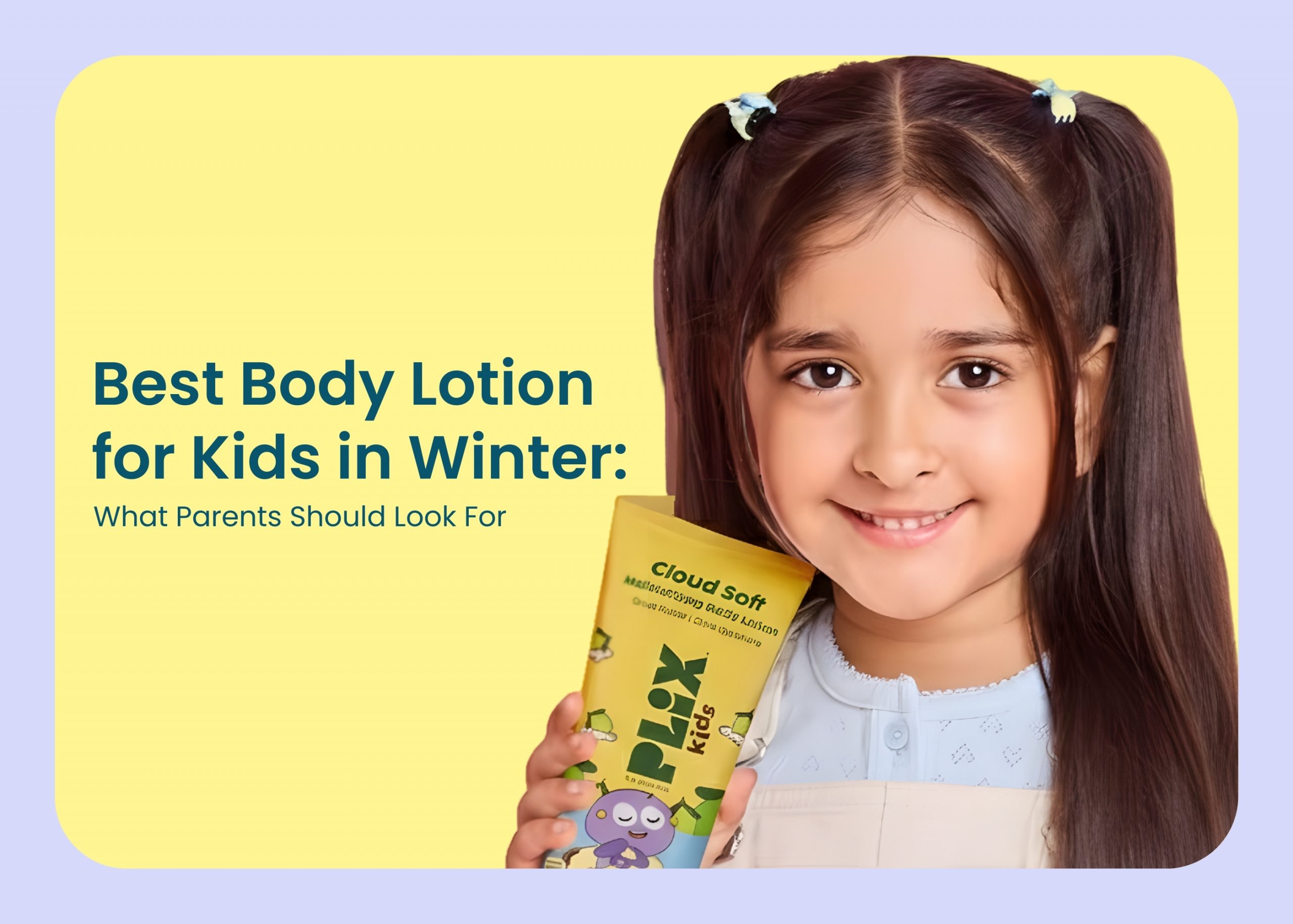
The Plix Kids Cloud Soft Moisturizing Body Lotion combines natural ingredients like Shea Butter, Olive Squalane, Aloe Vera, and Neem Extract with pediatrician testing. It provides 24-hour moisture lock without the greasy feel many parents worry about.
Chemical vs. Chemical-Free
Here’s a simple breakdown to help you compare products:
| Factor | Regular Products | Chemical-Free Products |
| Main Ingredients | Synthetic surfactants, parabens, sulfates | Plant-based extracts, natural oils |
| Skin Barrier Impact | May strip natural moisture | Supports and nourishes the skin barrier |
| pH Balance | Often too alkaline for kids | Balanced at pH 5.5 |
| Winter Performance | Can worsen dryness | Provides lasting hydration |
| Safety Testing | May lack pediatric testing | Pediatrician-approved, clinically tested |
Looking for a complete winter skincare routine? Try combining the Happy Skin Bathing Bar with the Cloud Soft Body Lotion for a gentle cleanse-and-moisturize routine that keeps skin soft all winter long.
Give your kid the gentle care they deserve. Start with Plix Kids Personal Care range, which is pediatrician-approved, clinically tested, and made with love.
Frequently Asked Question
Q. What ingredients should I avoid in kids’ winter skincare?
Focus on avoiding parabens, sulfates (SLS/SLES), phthalates, synthetic fragrances, formaldehyde-releasing preservatives, and mineral oils. These can irritate sensitive skin, especially during winter when the skin barrier is already vulnerable.
Q. How do I identify chemical-free products for kids?
Look for products that are pediatrician-approved and clinically tested. Check for PETA approval if cruelty-free matters to you. Read ingredient lists and prioritize products with plant-based ingredients listed first. Avoid anything that simply says “fragrance” without specifying the source.
Q. Are natural products always safer for kids’ skin?
Not always. Some natural ingredients, like certain essential oils, can be too strong for young skin. The safest choice is products that combine natural ingredients with clinical testing to confirm they’re gentle enough for kids. Pediatrician-approved products offer an extra layer of assurance.
Q. What harmful chemicals are commonly found in kids’ skincare products?
Common concerns include parabens (preservatives linked to hormone disruption), sulfates (foaming agents that can dry out skin), phthalates (often hidden in fragrances), and formaldehyde-releasing preservatives. These chemicals are particularly concerning for young skin, which absorbs products more readily than adult skin.
Q. How should I read labels on kids’ personal care products?
Start by checking for certifications like pediatrician-approved or PETA-approved. Ingredients are listed in order of concentration, so avoid products where synthetic chemicals appear in the first five ingredients. Look for specific pH information (5.5 is ideal for skin) and be wary of vague terms like “fragrance” or “parfum.